
Screens are now part of everyday life. From phones and tablets to computers, televisions, and LED lighting, our eyes are exposed to more artificial light and near-focus work than ever before.
Many people search for ways to protect eyes from blue light, especially when they experience tired eyes, dryness, blurred vision, or visual discomfort after long periods of screen use. While blue light is often blamed for all screen-related discomfort, eye-health experts note that digital eye strain is usually linked more to prolonged focusing, reduced blinking, glare, poor lighting, and screen habits than to blue light alone.
The good news is that simple daily habits can help support eye comfort and long-term vision health.
What Is Blue Light?
Blue light is a high-energy visible light that comes from natural sunlight as well as digital screens and LED lighting. Sunlight is by far the strongest source of blue light, but screens can still affect how your eyes feel during the day and may influence sleep when used late at night.
The Canadian Association of Optometrists notes that too much artificial blue light exposure at night may affect sleep quality by interfering with melatonin and sleep-wake patterns.
Does Blue Light Damage the Eyes?
For most people, the discomfort from screen use is not mainly caused by blue light damaging the eyes. According to the American Academy of Ophthalmology, digital eye discomfort is usually related to how we use screens — long focus time, reduced blinking, screen glare, brightness, and viewing distance.
That is why the best approach is not only to think about blue light, but to build a complete daily routine for screen-time eye health.
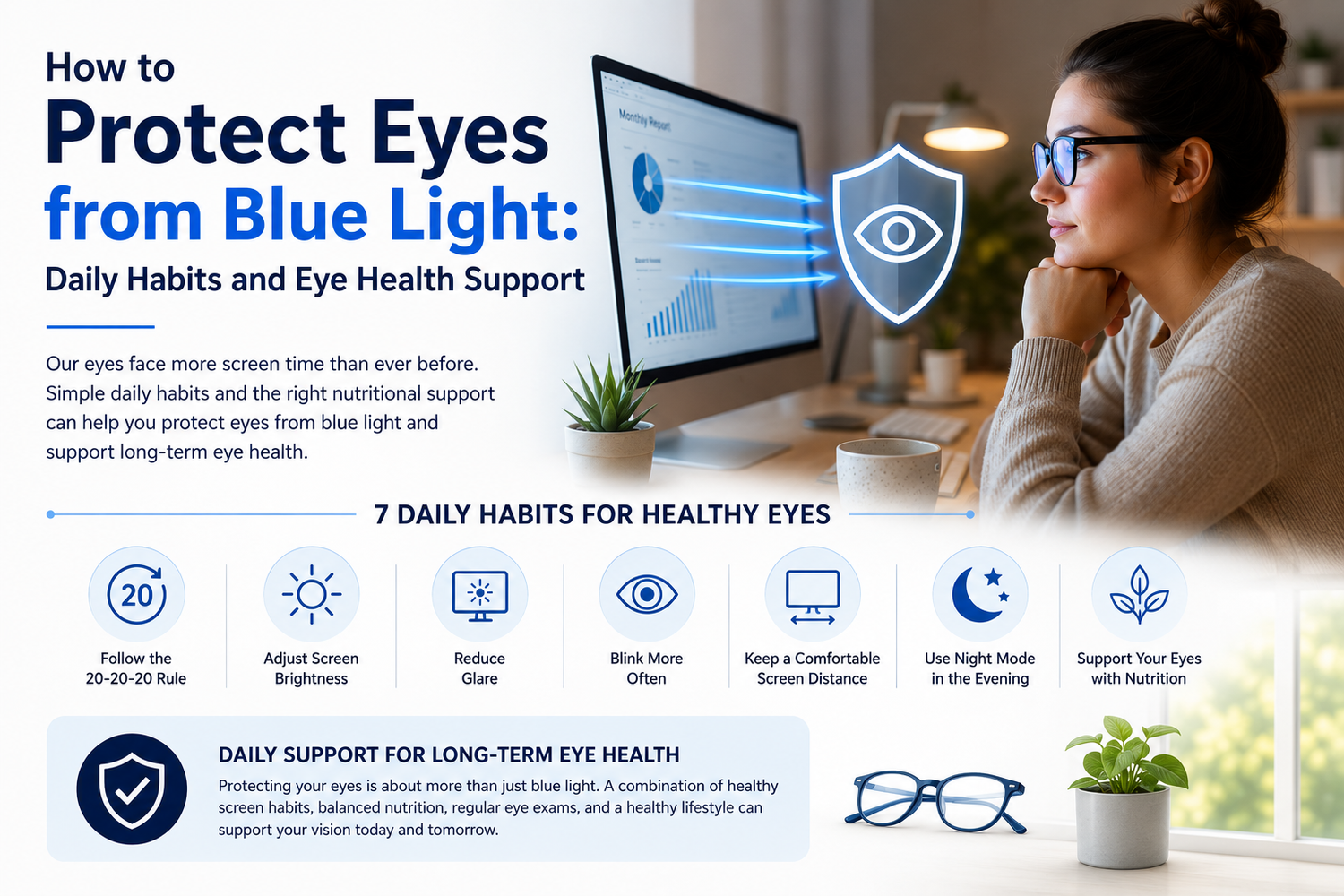
7 Daily Habits to Protect Eyes from Blue Light and Screen-Time Stress
1. Follow the 20-20-20 Rule
When using a screen for long periods, take regular visual breaks. A simple method is the 20-20-20 rule: every 20 minutes, look at something about 20 feet away for 20 seconds. This helps relax the focusing system of the eyes and may reduce digital eye strain.
2. Adjust Your Screen Brightness
Your screen should not be much brighter or darker than your surroundings. If your screen feels like a light source in a dark room, it may increase visual discomfort. Try adjusting brightness and contrast so the screen feels comfortable and easy to read. The American Academy of Ophthalmology recommends matching screen brightness to surrounding light and increasing contrast when needed.
3. Reduce Glare
Glare from windows, overhead lights, or reflective surfaces can make your eyes work harder. Position your screen away from direct glare, clean the screen regularly, and consider adjusting room lighting.
4. Blink More Often
People tend to blink less when looking at screens. Less blinking can contribute to dryness, irritation, and tired eyes. Make a conscious effort to blink fully, especially during long work sessions.
5. Keep a Comfortable Screen Distance
Avoid holding your phone too close to your face. For computers, keep the screen at a comfortable distance and slightly below eye level. This can help reduce eye strain as well as neck and shoulder tension.
6. Use Night Mode in the Evening
Blue light exposure at night may affect sleep for some people. In the evening, consider using night mode, reducing screen brightness, and avoiding intense screen exposure close to bedtime.
7. Support Your Eyes with Nutrition
Eye health is also influenced by daily nutrition. A healthy diet rich in colourful vegetables, leafy greens, fruits, omega-3 sources, and antioxidants can help support overall eye health.
For people looking for additional daily support, Saffron 2020 is designed to support eye health and visual function. It can be part of a broader eye-care routine that includes healthy screen habits, regular eye exams, balanced nutrition, and lifestyle support.
Where Saffron 2020 Fits
Saffron 2020 is not a replacement for professional eye care, screen breaks, or healthy lifestyle habits. Instead, it is designed as a daily eye-health supplement to support visual function and age-related vision needs.
If you spend long hours on screens or are looking for daily vision support, Saffron 2020 may be a useful addition to your routine.
The Bottom Line
To protect eyes from blue light, the best approach is a combination of smart screen habits and daily eye-health support. Take regular breaks, reduce glare, adjust brightness, blink often, limit late-night screen exposure, and support your eyes with good nutrition.
Your eyes work hard every day. A few small habits can make a meaningful difference in how they feel and function over time.

Leave a comment
This site is protected by hCaptcha and the hCaptcha Privacy Policy and Terms of Service apply.