
Nutriepigenomics and Retinal Resilience: How Saffron Apocarotenoids Modulate Genetic Risk and Mitochondrial Health in AMD
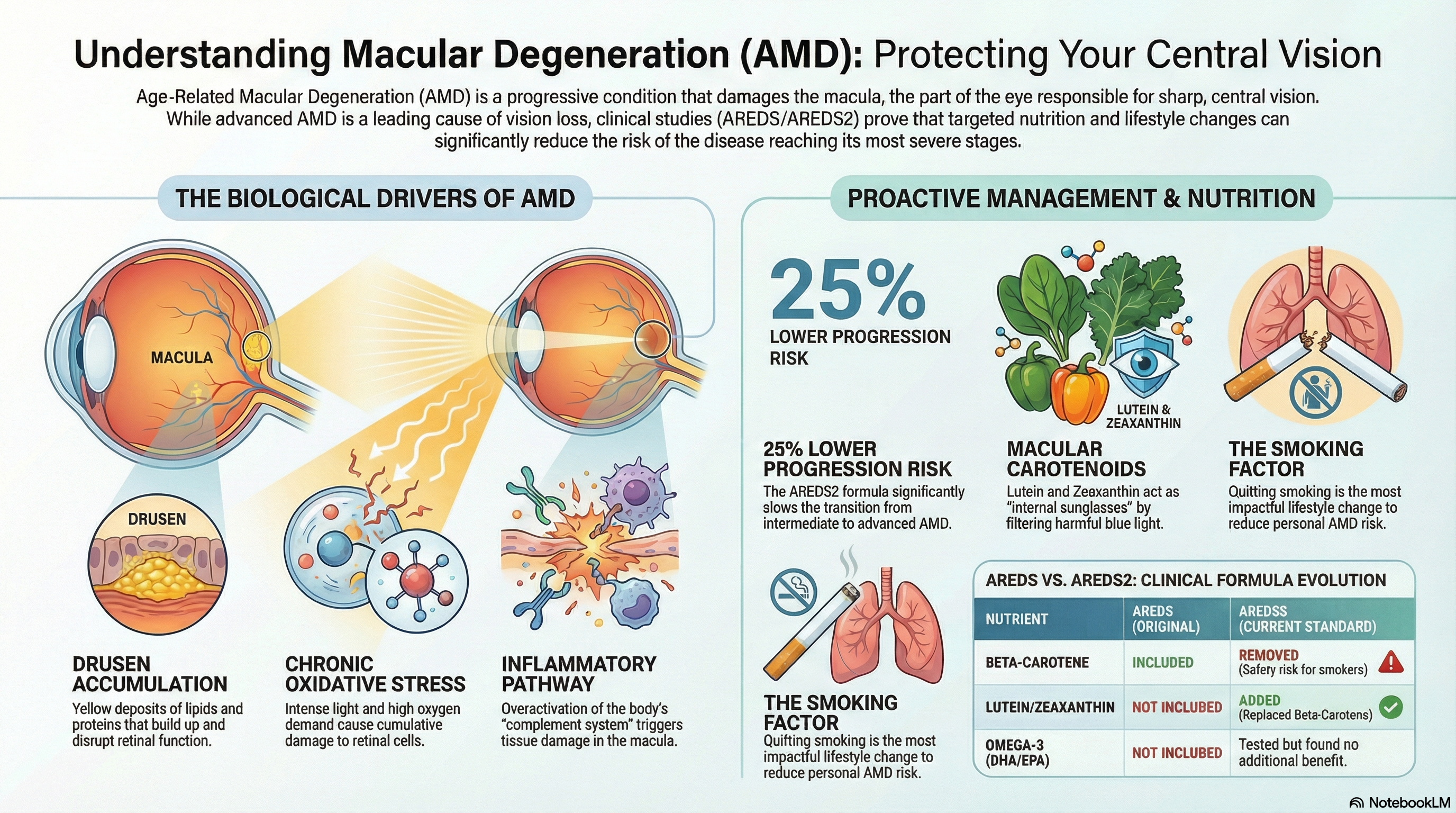
Age-related macular degeneration (AMD) is the leading cause of irreversible central vision loss in older adults in industrialized countries, and its global prevalence is projected to reach roughly 288 million people by 2040.¹ Rather than a single-pathway disease, AMD represents a systems‑level failure in which inherited risk variants, environmental stressors, and age‑driven epigenetic drift converge on the retinal pigment epithelium (RPE) and photoreceptors.² Anti‑VEGF injections have revolutionized outcomes for neovascular AMD, yet approximately 90% of patients live with the atrophic (dry) form, for which disease‑modifying options remain limited.¹ This gap has driven intense interest in nutriepigenomics—the capacity of bioactive nutrients to reshape epigenetic programs and mitochondrial function in ways that buffer genetically vulnerable tissue against aging stress.⁵ ⁸
Within this space, the apocarotenoids of saffron (Crocus sativus L.), especially crocin and crocetin, are emerging as multi‑target regulators of retinal homeostasis. Clinical and translational studies suggest that these compounds can tune the SIRT1–PGC‑1α axis, modulate DNA methylation, and stabilize non‑coding RNA networks, with downstream effects on inflammation, oxidative stress, and mitochondrial quality control.⁸

Genetic Architecture: Fixed Risk in Complement, Lipid, ECM and Angiogenic Pathways
Twin and family studies estimate AMD heritability between ~46–71%, indicating a substantial genetic contribution.⁵ Large GWAS consortia have now catalogued >50 independent variants across at least 34 loci that shape susceptibility to advanced AMD.¹⁰ These signals are not random; they cluster in a few core pathways:
-
Complement and innate immunity. The CFH Y402H variant (rs1061170) remains the canonical AMD risk allele, impairing regulation of the alternative complement pathway and predisposing to chronic subretinal inflammation.¹ Risk alleles in C2, C3, CFB and CFI reinforce the view of AMD as a disease of persistent, low‑grade complement activation.¹ ²
-
Lipid handling. Variants in APOE, LIPC, ABCA1 and ELOVL2 affect cholesterol efflux and lipoprotein processing in the outer retina, promoting drusen formation and metabolic stress in the RPE.¹
-
ECM integrity and angiogenesis. Polymorphisms at the HTRA1/ARMS2 locus strongly predict progression to geographic atrophy and neovascular AMD, while VEGFA and its receptor FLT1 govern pathologic angiogenesis in the wet subtype.¹ ¹¹

More recent diverse‑ancestry GWAS (IAMDGC 2.0) have added loci such as OCA2, NOA1 and WARS1, implicating melanosomal biology, nitric‑oxide signaling and amino‑acid metabolism as additional layers of risk that vary across populations.¹⁰ ¹¹
Epigenetic Drift in the Aging Retina
Genetic variants set the baseline, but epigenetic mechanisms determine how those genes are expressed over a lifetime.⁵ In the RPE and neural retina, age and environment reconfigure:
-
DNA methylation. Smoking‑related hypomethylation of GPR15 and hypermethylation of protective genes such as CLU and GST isoforms link environmental insults to chronic inflammation and loss of antioxidant capacity.¹ ⁵
-
Histone marks. Imbalanced histone acetylation–deacetylation, mediated by HATs, HDACs and sirtuins, alters chromatin accessibility. In AMD models, dysregulated HDAC activity contributes to RPE dedifferentiation and a pro‑fibrotic, EMT‑like phenotype; HDAC inhibition can restore expression of protective factors like PEDF.¹ ⁹
-
Non‑coding RNAs. MicroRNAs (for example miR‑181a/b, miR‑23a), lncRNAs (TUG1, MALAT1) and circRNAs orchestrate mitochondrial function, antioxidant signaling and inflammatory responses.¹ Loss of DICER1 leads to toxic Alu RNA accumulation and activation of the NLRP3 inflammasome—an epigenetic failure closely tied to geographic atrophy.¹
This epigenetic re‑wiring converges on mitochondrial control hubs such as PGC‑1α, NRF2, SIRT1 and the PINK1/PARKIN mitophagy machinery, driving the “energy crisis” typical of dry AMD.¹ ⁶ ⁷

Saffron Apocarotenoids: Clinical Signal and Molecular Mechanisms
Functional data in early AMD
Multiple randomized and longitudinal studies show that oral saffron (≈20–50 mg/day) can improve retinal function in early or intermediate AMD:
-
Gains in best‑corrected visual acuity and contrast sensitivity that stabilize after ~3 months and persist with continued use.³ ⁴ ¹³
-
Enhanced retinal flicker sensitivity and mfERG response densities, indicating improved photoreceptor performance.⁵ ¹³
-
An excellent safety margin, with adverse effects only at doses far above those used clinically.³ ⁴
These functional benefits prompted deeper mechanistic work at transcriptomic and epigenetic levels.

Gene‑level and epigenetic modulation
Experimental models and human‑derived RPE data suggest saffron apocarotenoids engage several classes of targets:⁵ ⁸ ⁹ ¹²
-
Inflammation and stress genes. Down‑regulation of Ccl2 and Hmox1 dampens macrophage recruitment and chronic stress signaling, while up‑regulation of Edn2 supports FGF‑2–mediated photoreceptor survival.¹
-
Epigenetic enzymes.
-
Crocin derivatives can bind and inhibit DNMT1, potentially preventing hypermethylation of neuroprotective genes such as CLU.⁹
-
Crocetin inhibits HDAC2, favouring a more open chromatin state for antioxidant and anti‑inflammatory genes.⁹
-
Picrocrocin and crocetin activate SIRT1, the longevity‑associated deacetylase that is required for optimal PGC‑1α and NRF2 activity.⁷ ⁸
-
-
Non‑coding RNA networks. Saffron modulates a broad panel of ncRNAs; for example, it appears to counteract miR‑23a/27a‑driven impairment of mitophagy and to support lncRNAs such as TUG1 that stabilise PGC‑1α and NRF2 signaling.¹ ¹²
Collectively, these actions position saffron as a nutriepigenomic agent that nudges the retinal epigenome back toward a more youthful, resilient configuration.

Repairing the Mitochondrial Hub: The SIRT1–PGC‑1α Axis
The RPE’s extreme metabolic workload makes its mitochondria particularly vulnerable. In AMD models, repression of SIRT1–PGC‑1α signaling leads to defective mitophagy, ROS accumulation, lipofuscin build‑up and eventual RPE atrophy.¹ ⁶ ⁷ Double knockout of NRF2 and PGC‑1α in mice recapitulates key features of human dry AMD, underscoring this axis as a high‑value target.⁶
Saffron apocarotenoids act at several points along this pathway:⁷ ⁸ ¹⁰
-
Activating SIRT1, which deacetylates and activates PGC‑1α.
-
Upregulating PGC‑1α‑dependent programs of mitochondrial biogenesis and oxidative phosphorylation, helping to reverse the RPE “energy crisis.”
-
Normalizing autophagy/mitophagy, supporting clearance of damaged mitochondria and preventing toxic debris accumulation.
-
Enhancing NRF2‑driven antioxidant defences, reducing ROS‑mediated DNA and lipid damage.
These mechanisms align with observed improvements in retinal function and may explain why saffron shows promise both as a stand‑alone nutraceutical and as an adjunct to lifestyle interventions such as exercise, which converge on the same SIRT1–PGC‑1α–NRF2 triad.⁸

Positioning Saffron Among Emerging Epigenetic and Mitochondrial Therapies
Multiple experimental strategies target similar nodes in AMD biology:
-
Global epigenetic drugs such as 5‑AZA/DAC and broad‑spectrum HDAC inhibitors (e.g., trichostatin A, vorinostat) can reactivate silenced protective genes in RPE models, but their lack of specificity and systemic toxicity limit chronic use in an elderly population.⁵ ¹⁷ ²⁰
-
miRNA mimics/antagomirs offer precision at the RNA level, yet delivery to the posterior eye remains challenging.¹
-
Photobiomodulation (PBM) at 670 nm boosts mitochondrial performance and modulates overlapping gene networks, including FGF‑2 and Ccl2.¹ ⁴³ Interestingly, concurrent PBM and saffron do not produce additive benefits in animal models, suggesting pathway convergence; sequential use may be more rational.⁴³
Against this backdrop, saffron sits as an orally available, multi‑target agent with a comparatively benign safety profile and demonstrable functional benefit in early AMD.³ ⁴ ⁸

Outlook: From Genetic Destiny to Epigenetic Stewardship
The integration of GWAS, functional genomics and nutriepigenomics is shifting our view of AMD from a fixed genetic destiny to a modifiable systems disease. Genetic variants in complement, lipid, ECM and mitochondrial pathways may load the dice, but the epigenetic and metabolic “software” of the retina remains plastic well into late adulthood.¹ ⁵
Saffron apocarotenoids exemplify this new therapeutic logic: by influencing DNMT1 and HDAC2 activity, tuning ncRNA networks, and reinforcing SIRT1–PGC‑1α–NRF2 signaling, they help preserve mitochondrial competence and dampen chronic inflammatory stress in the RPE.¹ ⁶–⁹ Future work should prioritise:
-
Human RPE and organoid models to validate saffron’s effects on high‑value targets such as DICER1, CFH and PGC‑1α.
-
Identification of circulating miRNA or metabolite signatures that predict response to saffron‑based interventions.
-
Rational combinations—e.g., with PBM or exercise—that exploit shared pathways without saturating them.
As the AMD field moves toward earlier, mechanism‑based intervention, saffron—an ancient botanical now decoded at the genomic and epigenomic level—offers a compelling prototype for safe, multi‑target strategies that protect the metabolic engine of sight.


Bibliography
Ahmadi, M., et al., 'Neuroprotective role of saffron in GEO database', Research Journal of Pharmacognosy, 11 no. 1 (2024). https://www.rjpharmacognosy.ir/article_211130_962f72520ef146b9e8129af5b672d97f.pdf
Bi, X., et al., 'Crocin exerts anti-proliferative and apoptotic effects on cutaneous squamous cell carcinoma via miR-320a/ATG2B', Bioengineered, 12 no. 1 (2021): 4569-4580. https://www.tandfonline.com/doi/full/10.1080/21655979.2021.1955175
Broadhead, G. K., et al., 'Saffron therapy for the treatment of mild/moderate age-related macular degeneration: a randomised clinical trial', Graefe's Archive for Clinical and Experimental Ophthalmology, 257 no. 1 (2019): 31-40. https://sydneyretina.com.au/resources/scientific-journal-publications/saffron-therapy-for-the-treatment-of-mild-moderate-age-related-macular-degeneration-a-randomised-clinical-trial/
Broadhead, G. K., et al., 'Saffron therapy for the ongoing treatment of age-related macular degeneration', BMJ Open Ophthalmology, 4 no. 1 (2019). https://pmc.ncbi.nlm.nih.gov/articles/PMC10941132/
Falsini, B., et al., 'Saffron Supplementation Improves Retinal Flicker Sensitivity in Early Age-Related Macular Degeneration', Investigative Ophthalmology & Visual Science, 51 no. 12 (2010): 6118–6124. https://pmc.ncbi.nlm.nih.gov/articles/PMC3407634/
Felszeghy, S., et al., 'Loss of NRF-2 and PGC-1$\alpha$ genes leads to retinal pigment epithelium damage resembling dry age-related macular degeneration', Redox Biology, 20 (2019): 1-12. https://pmc.ncbi.nlm.nih.gov/articles/PMC6156745/
Golestaneh, N., et al., 'Repressed SIRT1/PGC-1$\alpha$ pathway and mitochondrial disintegration in iPSC-derived RPE disease model of age-related macular degeneration', Journal of Translational Medicine, 14 (2016): 344. https://pmc.ncbi.nlm.nih.gov/articles/PMC5115823/
Heitmar, R., Brown, J., and Kyrou, I., 'Saffron (Crocus sativus L.) in Ocular Diseases: A Narrative Review of the Existing Evidence from Clinical Studies', Nutrients, 11 no. 3 (2019): 649. https://pmc.ncbi.nlm.nih.gov/articles/PMC11537240/
Hyttinen, J. M. T., et al., 'Non-Coding RNAs Regulating Mitochondrial Functions and the Oxidative Stress Response as Putative Targets against Age-Related Macular Degeneration (AMD)', International Journal of Molecular Sciences, 24 no. 1 (2023): 14. https://pmc.ncbi.nlm.nih.gov/articles/PMC11812471/
Karimi, P., et al., 'Crocetin Prevents RPE Cells from Oxidative Stress through Protection of Cellular Metabolic Function and Activation of ERK1/2', International Journal of Molecular Sciences, 21 no. 9 (2020): 3131. https://pmc.ncbi.nlm.nih.gov/articles/PMC7215651/
Maccarone, R., et al., 'Modulation of Type-1 and Type-2 Cannabinoid Receptors by Saffron', PLOS ONE, 11 no. 11 (2016). https://journals.plos.org/plosone/article?id=10.1371/journal.pone.0166827
Natoli, R., et al., 'Gene and noncoding RNA regulation underlying photoreceptor protection: microarray study of dietary antioxidant saffron and photobiomodulation in rat retina', Molecular Vision, 16 (2010): 1801-1822. https://pmc.ncbi.nlm.nih.gov/articles/PMC2932490/
Piccardi, M., et al., 'A Longitudinal follow-up study of saffron supplementation in early age-related macular degeneration', Evidence-Based Complementary and Alternative Medicine, (2012). https://pmc.ncbi.nlm.nih.gov/articles/PMC3850693/
Puddu, A., et al., 'Combination of Saffron (Crocus sativus), Elderberry (Sambucus nigra L.) and Melilotus officinalis Protects ARPE-19 Cells from Oxidative Stress', Antioxidants, 13 no. 1 (2024): 10. https://www.mdpi.com/2076-3921/14/12/1433
Reddy, P. S., et al., 'Crocetin: A systematic review of its distribution, production, and pharmacological activities', Frontiers in Pharmacology, 11 (2020). https://www.frontiersin.org/journals/pharmacology/articles/10.3389/fphar.2021.745683/full
Rivkaie, G., 'Mechanisms of Epigenetic Regulation: Roles of RNA and DNA Methylation', Journal of Molecular Pathology and Biochemistry, 5 (2024): 193. https://www.longdom.org/open-access/mechanisms-of-epigenetic-regulation-roles-of-rna-and-dna-methylation-1100098.html
Sanz-González, S. M., et al., 'miRNAs and Genes Involved in the Interplay between Ocular Hypertension and Primary Open-Angle Glaucoma', International Journal of Molecular Sciences, 22 (2021): 6112. https://pmc.ncbi.nlm.nih.gov/articles/PMC8196557/
Zhang, Y., et al., 'Diverse-Ancestry GWAS of Age-Related Macular Degeneration', Investigative Ophthalmology & Visual Science, 65 no. 4 (2024). https://pubmed.ncbi.nlm.nih.gov/41159651/
Works cited
-
Saffron and the Epigenetic Landscape.docx
-
Deciphering gene–smoking interactions in age-related macular ..., accessed February 13, 2026, https://pmc.ncbi.nlm.nih.gov/articles/PMC12306451/
-
Crocus sativus (saffron) and age-related macular degeneration - Semantic Scholar, accessed February 13, 2026, https://pdfs.semanticscholar.org/1e77/523d2d99c007e9c31ba7619a36fc1e14d8ea.pdf
-
A Longitudinal Follow-Up Study of Saffron Supplementation in Early Age-Related Macular Degeneration: Sustained Benefits to Central Retinal Function - PMC, accessed February 13, 2026, https://pmc.ncbi.nlm.nih.gov/articles/PMC3407634/
-
An Updated Review of the Epigenetic Mechanism Underlying the ..., accessed February 13, 2026, https://www.aginganddisease.org/EN/10.14336/AD.2019.1126
-
Functional genomics in age-related macular degeneration: From genetic associations to understanding disease mechanisms - PubMed, accessed February 13, 2026, https://pubmed.ncbi.nlm.nih.gov/40089136/
-
Review of Non-coding RNAs and the epigenetic regulation of gene expression: A book edited by Kevin Morris - PMC, accessed February 13, 2026, https://pmc.ncbi.nlm.nih.gov/articles/PMC3398993/
-
Integrative effects of saffron and physical activity on endurance ..., accessed February 13, 2026, https://pmc.ncbi.nlm.nih.gov/articles/PMC12695556/
-
Epigenomics Nutritional Insights of Crocus sativus L.: Computational Analysis of Bioactive Molecules Targeting DNA Methyltransferases and Histone Deacetylases - PMC, accessed February 13, 2026, https://pmc.ncbi.nlm.nih.gov/articles/PMC12347544/
-
Diverse-Ancestry GWAS of Age-Related Macular Degeneration on 16108 Examined Cases and 18038 Controls - PubMed, accessed February 13, 2026, https://pubmed.ncbi.nlm.nih.gov/41159651/?utm_source=Firefox&utm_medium=rss&utm_campaign=pubmed-2&utm_content=18WX1aNNAKMkvmZ3zRd8rf7ux6nkHIxCUrpyj8fRkD7UOkkAfZ&fc=20240423213508&ff=20251030001440&v=2.18.0.post22+67771e2
-
Exploring Therapeutic Targets for Age-Related Macular Degeneration From Circulating Proteins to Plasma Metabolites in the European Population - PMC, accessed February 13, 2026, https://pmc.ncbi.nlm.nih.gov/articles/PMC12063708/
-
Functional effect of Saffron supplementation and risk genotypes in early age-related macular degeneration: a preliminary report - PMC, accessed February 13, 2026, https://pmc.ncbi.nlm.nih.gov/articles/PMC3850693/
-
(PDF) Repressed SIRT1/PGC-1α pathway and mitochondrial disintegration in iPSC-derived RPE disease model of age-related macular degeneration - ResearchGate, accessed February 13, 2026, https://www.researchgate.net/publication/311784484_Repressed_SIRT1PGC-1a_pathway_and_mitochondrial_disintegration_in_iPSC-derived_RPE_disease_model_of_age-related_macular_degeneration
-
Crocus sativus (saffron) and age-related macular degeneration - PMC, accessed February 13, 2026, https://pmc.ncbi.nlm.nih.gov/articles/PMC11537240/
-
Mechanisms of Epigenetic Regulation: Roles of RNA and DNA Methylation, accessed February 13, 2026, https://www.longdom.org/open-access/mechanisms-of-epigenetic-regulation-roles-of-rna-and-dna-methylation-1100098.html
-
Saffron, Its Active Components, and Their Association with DNA and Histone Modification: A Narrative Review of Current Knowledge - PMC, accessed February 13, 2026, https://pmc.ncbi.nlm.nih.gov/articles/PMC9414768/
-
Current trends in clinical trials and the development of small molecule epigenetic inhibitors as cancer therapeutics - PMC, accessed February 13, 2026, https://pmc.ncbi.nlm.nih.gov/articles/PMC11233149/
-
Epigenomics Nutritional Insights of Crocus sativus L.: Computational Analysis of Bioactive Molecules Targeting DNA Methyltransferases and Histone Deacetylases - ResearchGate, accessed February 13, 2026, https://www.researchgate.net/publication/394377267_Epigenomics_Nutritional_Insights_of_Crocus_sativus_L_Computational_Analysis_of_Bioactive_Molecules_Targeting_DNA_Methyltransferases_and_Histone_Deacetylases
-
Epigenetic Modifications in the Retinal Pigment Epithelium of the Eye During RPE-Related Regeneration or Retinal Diseases in Vertebrates - PubMed, accessed February 13, 2026, https://pubmed.ncbi.nlm.nih.gov/40722628/
-
Age-related Macular Degeneration (AMD) mitochondria modulate epigenetic mechanisms in retinal pigment epithelial cells - eScholarship.org, accessed February 13, 2026, https://escholarship.org/content/qt03p1v0j8/qt03p1v0j8_noSplash_e9c6569c4fdad3532679e43e9c892e16.pdf?t=rsc80b
-
Noncoding RNAs and DNA methylation as epigenetic modulators of breast cancer: mechanisms and clinical perspectives in the Iranian population, a systematic review - PMC, accessed February 13, 2026, https://pmc.ncbi.nlm.nih.gov/articles/PMC12837363/
-
Serum miRNA modulations indicate changes in retinal morphology - Frontiers, accessed February 13, 2026, https://www.frontiersin.org/journals/molecular-neuroscience/articles/10.3389/fnmol.2023.1130249/full
-
Epigenetic Regulation of DNA Methylation and RNA Interference in Gastric Cancer: A 2024 Update - MDPI, accessed February 13, 2026, https://www.mdpi.com/2227-9059/12/9/2001
-
(PDF) Combination of Saffron (Crocus sativus), Elderberry (Sambucus nigra L.) and Melilotus officinalis Protects ARPE-19 Cells from Oxidative Stress - ResearchGate, accessed February 13, 2026, https://www.researchgate.net/publication/388903620_Combination_of_Saffron_Crocus_sativus_Elderberry_Sambucus_nigra_L_and_Melilotus_officinalis_Protects_ARPE-19_Cells_from_Oxidative_Stress
-
Combination of Saffron (Crocus sativus), Elderberry (Sambucus nigra L.) and Melilotus officinalis Protects ARPE-19 Cells from Oxidative Stress - MDPI, accessed February 13, 2026, https://www.mdpi.com/1422-0067/26/4/1496
-
Study insights in the role of PGC-1α in neurological diseases: mechanisms and therapeutic potential - Frontiers, accessed February 13, 2026, https://www.frontiersin.org/journals/aging-neuroscience/articles/10.3389/fnagi.2024.1454735/full
-
Regulatory factors of Nrf2 in age-related macular degeneration pathogenesis - Semantic Scholar, accessed February 13, 2026, https://pdfs.semanticscholar.org/29a8/5df1a86987825f22da70568a508df49128e2.pdf
-
HDGF Protects Retinal Pigment Epithelium from Glyoxal-Induced Ferroptosis via SIRT1/PGC-1α/Nrf2 Pathway - MDPI, accessed February 13, 2026, https://www.mdpi.com/2076-3921/14/12/1434
-
The Nrf2 and PGC-1α deficient murine retina reveals retinal pigment epithelium damage that coincides with autophagy decline and damaged mitochondria. | IOVS, accessed February 13, 2026, https://iovs.arvojournals.org/article.aspx?articleid=2642230
-
Loss of NRF-2 and PGC-1α genes leads to retinal pigment epithelium damage resembling dry age-related macular degeneration - PMC, accessed February 13, 2026, https://pmc.ncbi.nlm.nih.gov/articles/PMC6156745/
-
Phytochemistry, Biological Activities, Molecular Mechanisms, and Toxicity of Saffron (Crocus sativus L.): A Comprehensive Overview - MDPI, accessed February 13, 2026, https://www.mdpi.com/2076-3921/14/12/1433
-
Integrative Analyses of Metabolome and Transcriptome Reveals Apocarotenoid and Flavonoid Biosynthesis During Saffron ( Crocus sativus L.) Stigmas Development - PubMed Central, accessed February 13, 2026, https://pmc.ncbi.nlm.nih.gov/articles/PMC12317191/
-
Crocetin: A Systematic Review - Frontiers, accessed February 13, 2026, https://www.frontiersin.org/journals/pharmacology/articles/10.3389/fphar.2021.745683/full
-
Saffron therapy for the ongoing treatment of age-related macular degeneration - PMC - NIH, accessed February 13, 2026, https://pmc.ncbi.nlm.nih.gov/articles/PMC10941132/
-
Saffron Therapy for Age-Related Macular Degeneration - Sydney Retina Clinic, accessed February 13, 2026, https://sydneyretina.com.au/resources/scientific-journal-publications/saffron-therapy-for-the-treatment-of-mild-moderate-age-related-macular-degeneration-a-randomised-clinical-trial/
-
Gene and noncoding RNA regulation underlying photoreceptor ..., accessed February 13, 2026, https://pmc.ncbi.nlm.nih.gov/articles/PMC2932490/
-
Modulation of Type-1 and Type-2 Cannabinoid Receptors by Saffron in a Rat Model of Retinal Neurodegeneration - PMC, accessed February 13, 2026, https://pmc.ncbi.nlm.nih.gov/articles/PMC5115823/
-
Saffron and retina: Neuroprotection and pharmacokinetics | Visual Neuroscience | Cambridge Core, accessed February 13, 2026, https://www.cambridge.org/core/journals/visual-neuroscience/article/saffron-and-retina-neuroprotection-and-pharmacokinetics/25F1449D4975FD466DF4476C5C1FEE3B
-
Effect of Endurance Training with Saffron Consumption on PGC1-α Gene Expression in Hippocampus Tissue of Rats with Alzheimer's Disease - Brieflands, accessed February 13, 2026, https://brieflands.com/journals/amhsr/articles/99131
-
Crocetin Prevents RPE Cells from Oxidative Stress through Protection of Cellular Metabolic Function and Activation of ERK1/2 - PubMed Central, accessed February 13, 2026, https://pmc.ncbi.nlm.nih.gov/articles/PMC7215651/
-
Novel Approaches to Epigenetic Therapies: From Drug Combinations to Epigenetic Editing - PMC, accessed February 13, 2026, https://pmc.ncbi.nlm.nih.gov/articles/PMC7911730/
-
The future of epigenetics: Emerging technologies and clinical applications - CAS, accessed February 13, 2026, https://www.cas.org/resources/cas-insights/epigenetics-emerging-technologies
-
Sequential PBM–Saffron Treatment in an Animal Model of Retinal Degeneration - MDPI, accessed February 13, 2026, https://www.mdpi.com/1648-9144/57/10/1059
-
Serum miRNA modulations indicate changes in retinal morphology - ResearchGate, accessed February 13, 2026, https://www.researchgate.net/publication/366277316_Serum_miRNA_modulations_indicate_changes_in_retinal_morphology

Leave a comment
This site is protected by hCaptcha and the hCaptcha Privacy Policy and Terms of Service apply.